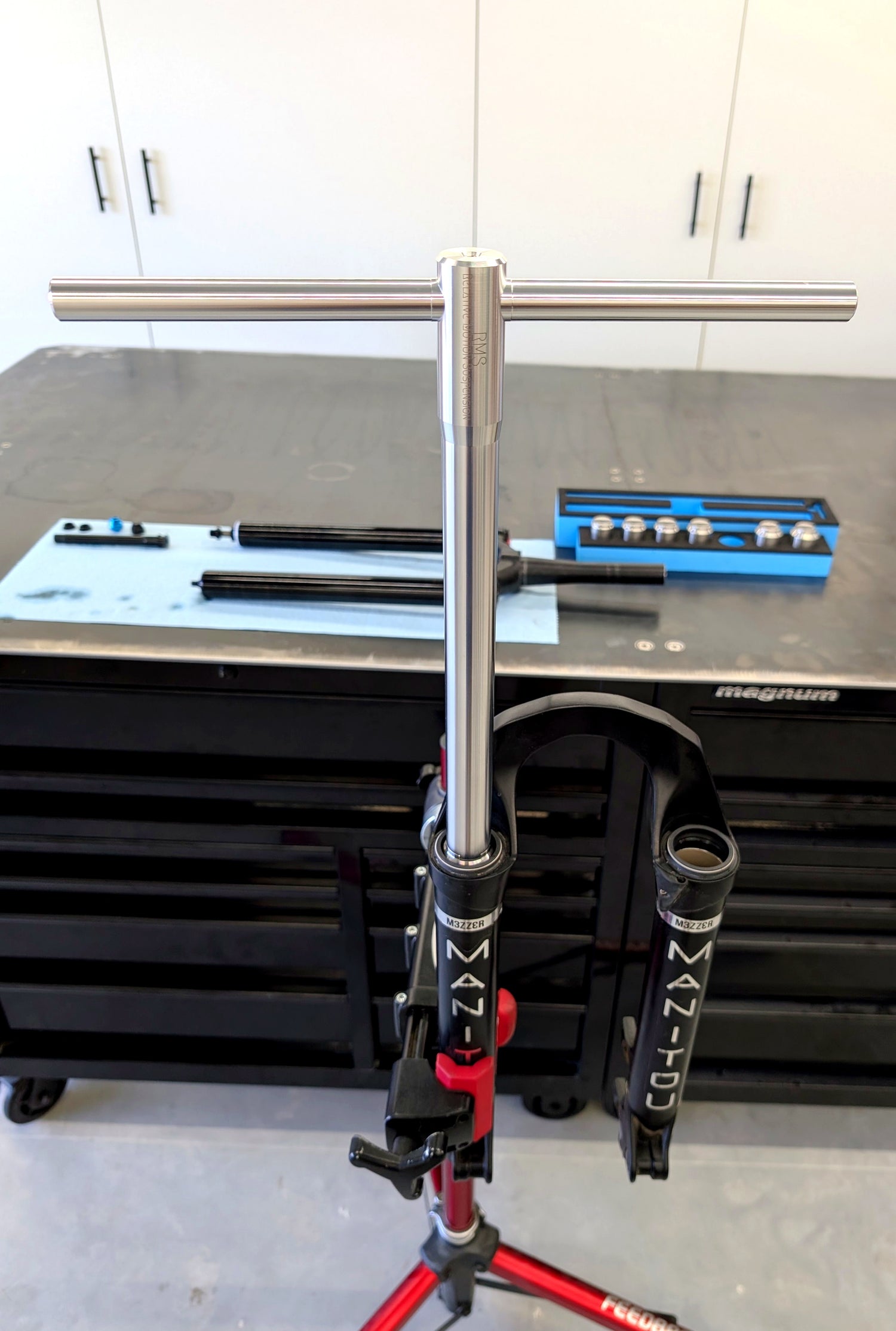
Your fork feeling harsh is a bushing problem, not a setup problem.
You've tried everything, lower leg service, damper adjustments, running rebound damping wide open, spring changes but yet the fork still feels harsh. That's because the problem is the fork bushings, not your setup. The RMS burnishing tool sizes and polishes the fork bushings correctly in ten minutes. Harshness gone. 500+ tools sold · 45 reviews and counting · Trusted by shops and home mechanics worldwide.
You've tried fresh oil, adjusted your damper tune and changed pressure or the spring. The fork still feels harsh, stiff, and unresponsive over small bumps, harsh in the middle of the travel, but handles big hits fine. The friction just won't go away.
You've tried the damper adjusters, changed pressure or spring rate, maybe tried a custom tune but the fork still feels harsh. Unresponsive at the top, harshness in the middle, but ok on big hits. Friction that just won't go away.
It's your fork bushings, not your setup.
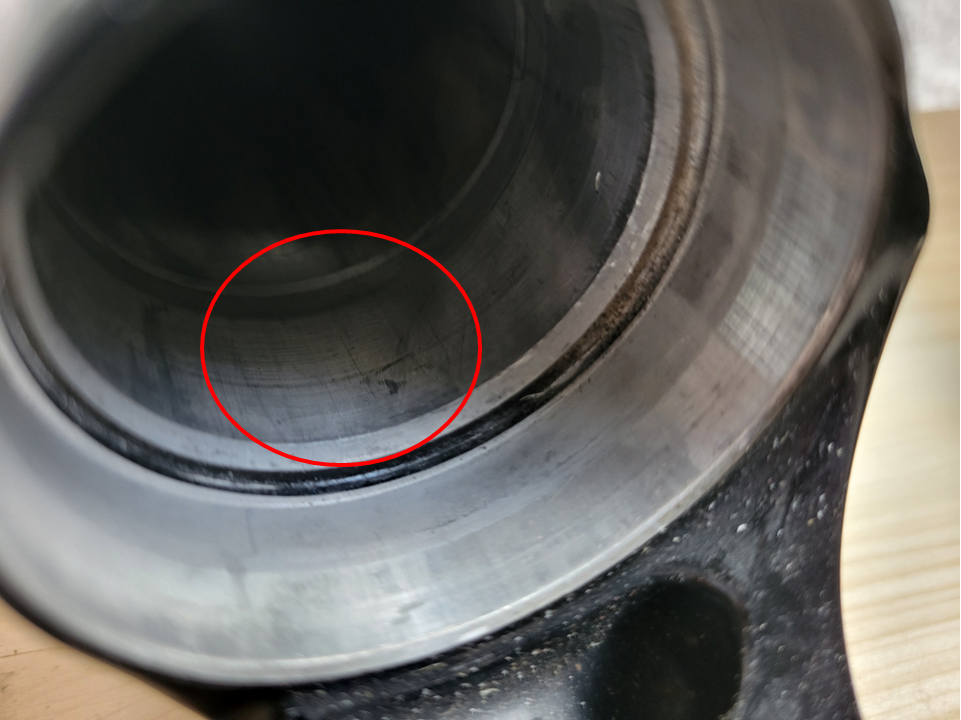
Fork lower legs are cast magnesium. The bushing seats are typically left as-cast with no machining. Castings warp slighly as they cool down, out of round is normal, not the exception. The bushings get pressed in at the factory, the stanchions get slid through, and if it moves, it ships.
As you ride, bushings that are too tight or out of round scrape the oil film off of the stanchions increasing friction and stiction. When the bushing seats are out of round, the bushing will permanently conform to these seats as the fork is ridden. The bore your stanchion runs in becomes out of round and point contact scrapes away the oil film from between the bushing and the stanchion. That's the friction you're feeling and no amount of oil or tuning fixes bushing geometry.
Burnishing makes the bushing bore round and sizes it to correct running clearance. The first time you do it on a ridden fork, the fix is permanent because the bushing has already fully conformed to its seat and has nowhere left to go.
Burnishing is a cold work sizing and polishing process, not a cutting process
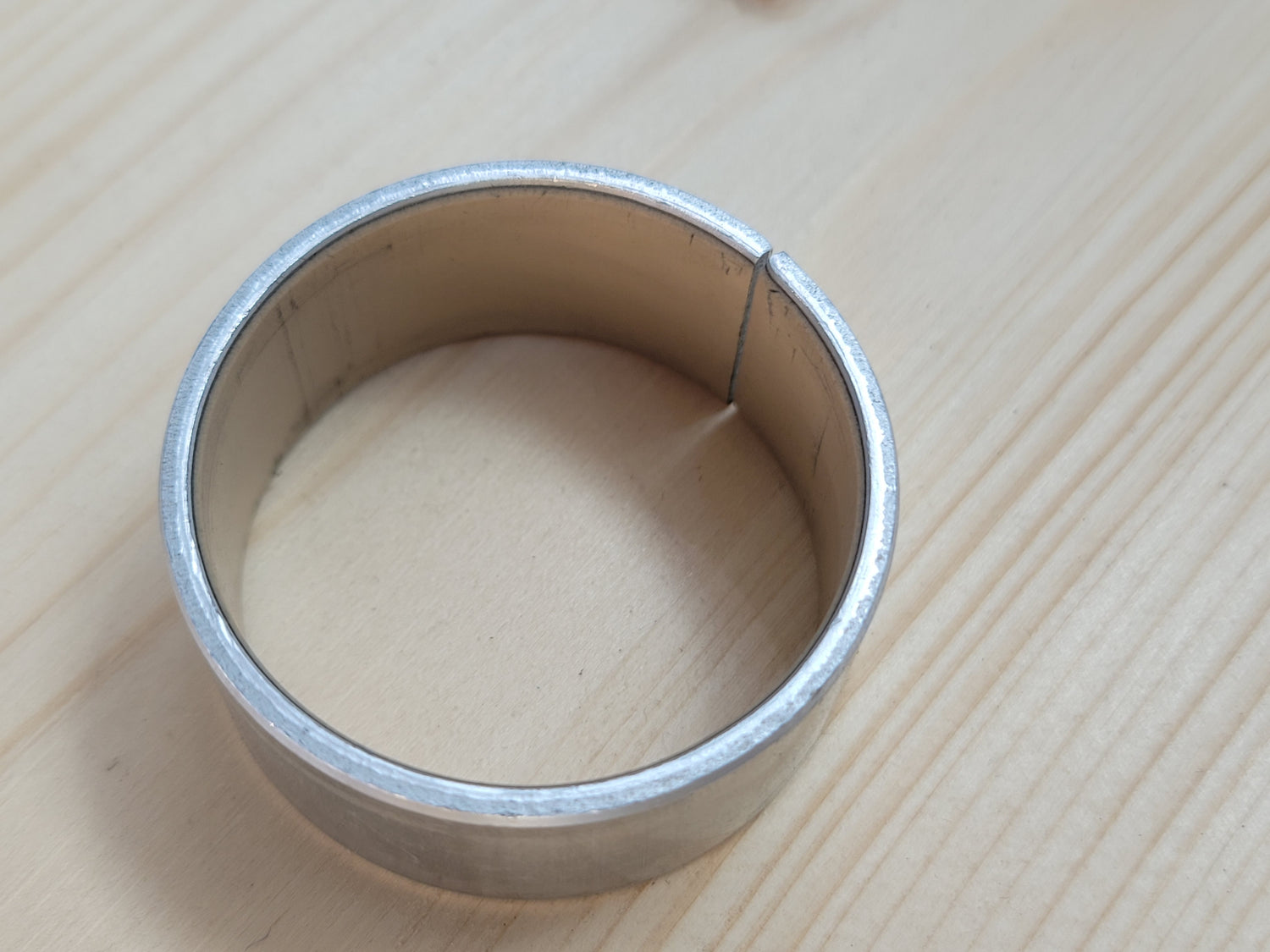
Fork bushings are made from a composite material — typically a PTFE-liner bonded to an aluminum backing.
The RMS tool passes through the installed bushing under controlled radial pressure. The PTFE surface is cold-worked to final dimension and smoothed. The result is a bushing that’s sized consistently, surface-finished correctly, and ready to accept the stanchion with the right clearance to form a perfect oil film.
Burnishing does not remove material, it only displaces it.
The bushing tells you when it’s done. The tool’s resistance plateaus as the process nears completion. You feel it level off, and that’s your signal the process is complete, a signal you can only detect when you’re running the tool by hand.
A drill doesn’t know when to stop. Your hands do.
The problem is the feedback loop. Or rather, the absence of one.
When you run a burnishing tool by hand, you feel the resistance decrease as the bushing sizes in. There’s a distinct plateau where additional passes no longer result in decreasing resistance of passing the tool through. That’s your completion signal. It’s repeatable, it’s reliable, and it requires your hands to detect it.
A drill has no idea where the bushing is in the sizing process. You’re flying blind with no way to know where you are at.
Hand operation also gives you a blueprint of the fork. You can physically feel which bushings are tighter and spend more time working those to get them all feeling even.
-
Completion feedback
The tool’s resistance plateaus when the bushing is sized. You feel it happen in real time.
-
Tactile control
You feel each bushing and will know which ones are tighter and need more work than others, something a drill driven tool is not capable of.
-
No over-burnishing
The tool's resistance plateaus when the bore reaches correct clearance. That plateau is your signal to stop.
Four steps. One precise fit.
-
Remove your lower legs
Pull your lower legs off as you normally would for a service. Clean the bushing bores before running the tool.
-
2. Select the correct head
Match the burnishing head to your stanchion diameter using the brand compatibility guide.
-
3. Run the tool through
Apply your manufacture specified lower leg lubricant oil and pass the head through the installed bushing. Feel the resistance. Work it until the feedback plateaus.
-
4. Assemble with confidence
The bushings are now sized and smoothed. Reassemble according to manufactures instructions and go ride the smoothest fork you've ever felt.
One tool. Three ways to get it.
-
Starter Kit
View Starter KitThe right tool for your fork, right now. Includes the handle and the correct burnishing head for one stanchion diameter. Choose your size at checkout.
-
Full Set
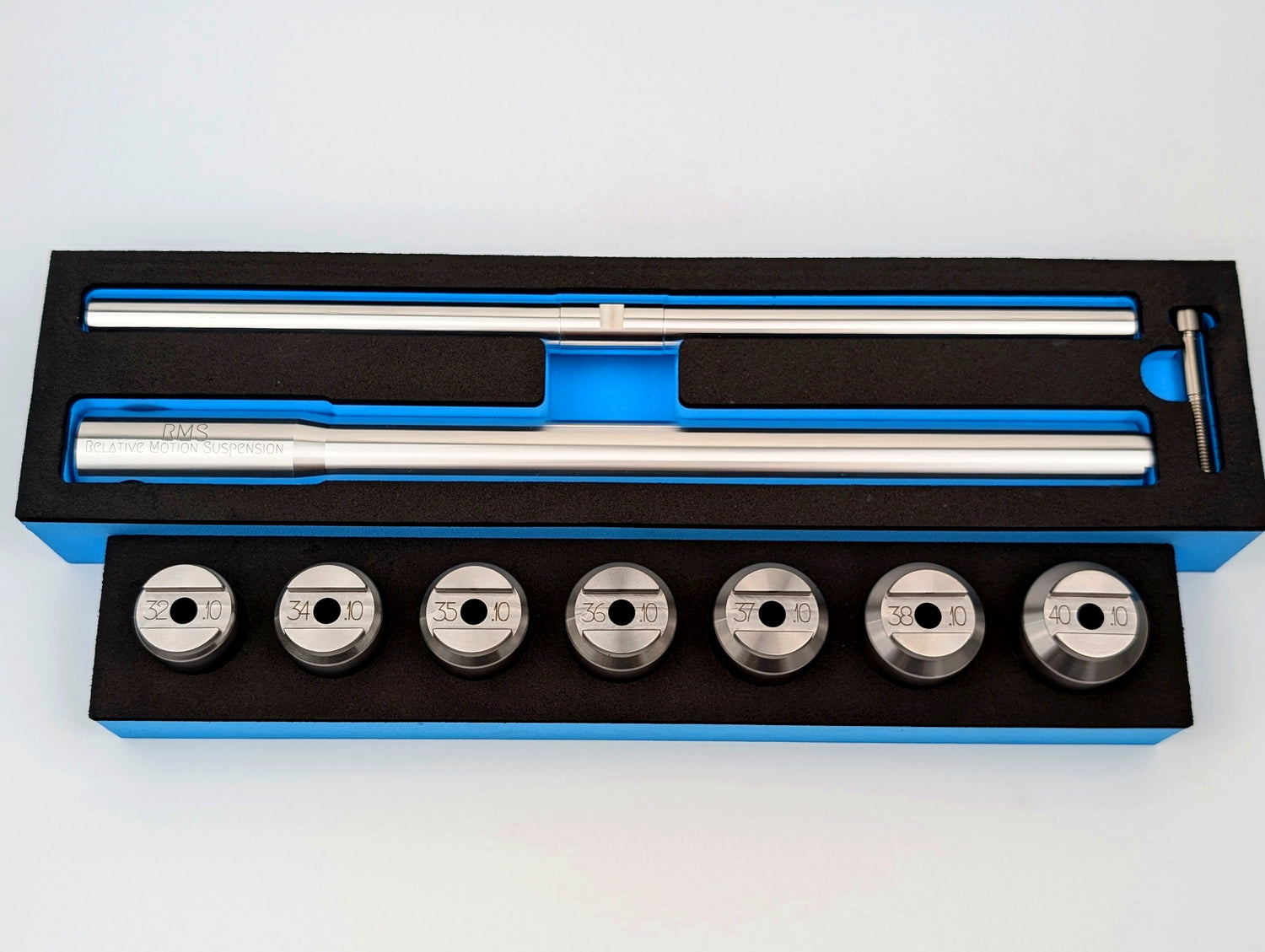
View Full SetBuilt for shops. Ready for anything that rolls in. Every standard head, one handle, foam-fitted storage case. Full coverage across virtually all fork platforms on the market.
-
Additional Heads
View Additional HeadsAlready have the handle? Add coverage. Individual heads and +size heads available for shops managing tight clearances or odd-spec forks.
Compatible with virtually every suspension fork
The RMS fork bushing burnishing / sizing tool covers the full range of modern MTB suspension forks from 32mm through 40mm stanchion diameters, with options for three different +sizes. Use the selector below to find the stanchion size of your fork.
Fork Compatibility Guide
Find your fork to confirm stanchion size and the correct head to order.
| Brand | Model | Stanchion | Head needed | Shop |
|---|
BOS & EXT note: The BOS Idylle 2021+, Idylle SC 2021+, Obsys, and EXT Vaia have stanchion dimensions or bushing designs that cannot be burnished with this tool. No head is currently available for these forks.
Not sure? Measure your stanchion directly with calipers if your fork isn't listed, or contact us at info@rmsuspension.com.
Not all burnishing tools are the same.
If you're comparing options, here's what actually matters.
| RMS — Hand-Operated | Drill-Driven Tools | |
|---|---|---|
| Completion signal | Tactile plateau — you feel the resistance level off when the bore reaches correct clearance | None |
| Knowable when done | Yes — the resistance plateau gives you a clear, repeatable signal | No |
| Risk of damage | Low — you feel immediately if something is wrong and can stop | High — no feedback means problems go undetected until damage is done |
What Technicians Are Saying
44 verified reviews · 500+ tools in the field
Your fork has been beating you up every ride. Ten minutes with the right tool ends that.
500+ tools in the field. 45 reviews and counting. Ships from BC.
Questions we actually get asked
Will this work on my fork?
Use the compatibility selector on this page. The tool covers most modern MTB suspension forks from 32mm to 40mm stanchion diameter. Known incompatible forks: BOS Obsys, EXT Vaia, BOS Idylle 39 (SC and DC), and Kyll 39.
I’m a home mechanic, not a shop. Is this too advanced?
If you’re already pulling your lowers and servicing your own fork, you’re exactly the person this tool is for. The process is straightforward — the tool guides itself through the bushing bore, and the feedback tells you when you’re done. No specialized skills required beyond what you already have.
Starter Kit or Full Set?
Starter Kit if you’re servicing one fork or a known set and you know your stanchion diameter. Full Set if you run a shop or work across multiple bikes with different fork specs — you won’t want to be waiting on a head order when an unfamiliar fork hits the stand.
What oil do I use?
The same oil the manufacture specifies for lower leg lubrication. Apply the oil to the bushing bore and the burnish head before running the tool through.
Can I over-burnish a bushing?
Not with a hand tool. As the bore reaches correct clearance, the tool's resistance plateaus — additional passes stop changing the bore. That plateau is your signal to stop. It's also useful for diagnosing your fork: bushings that need more work will feel noticeably tighter than ones that are already close to size.
How do I choose the right head size?
Match the burnish head size to your stanchion diameter. If you've already burnished and the fit is still too snug, the next +size up is the best bet. The compatibility guide and +size guidance on the Additional Heads page walk you through the decision.
What is spring-back and do I need to account for it?
After burnishing, the PTFE bushing material relaxes slightly — normal elastic behaviour in composite material. The RMS heads are sized to account for this, so the final bore dimension after spring-back lands at the correct running clearance. Nothing extra required — it’s already factored in.
What symptoms mean my bushings need this?
Stiction at the top of the stroke. Subtle notchiness through travel. A fork that feels okay after a fresh service but degrades quickly. These are all signs of bushings that were never sized correctly. The only thing that breaks in on a fork is the main seals — proper bushing clearance and roundness should be there from the first ride.
Where does this ship from and how long does it take?
Ships from British Columbia, Canada. Canadian orders typically arrive in 3–7 business days. US orders ship via UPS and typically arrive in 5–10 business days. Shipping to the EU and Australia/New Zealand is typically 5–10 business days.
What’s your return policy?
If the tool doesn’t work for your application, reach out within 30 days. We’ll make it right. This is a precision tool and we stand behind it.